
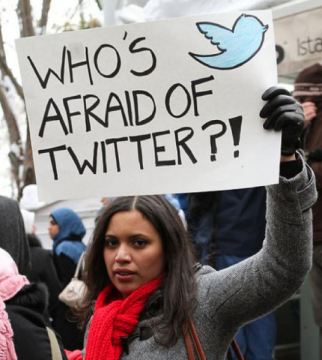
While the Egyptian Revolution succeeded in ousting President Hosni Mubarak, a debate continues to rage as to the exact role played by social media.
By Jasmine Elnadeem
I was born in Egypt in 1984 in the era of President Hosni Mubarak. For 26 years, he was the only leader I had ever been exposed to in my country.
During Mubarak’s rule, Egypt was divided into two groups: the first benefited from the regime and was complicit in its crimes; the other opposed the regime’s policies and everything they stood for.
Social media gradually became a substitute for traditional media, which is state-controlled.
For millions of Egyptian youths like myself, social media became a powerful way to communicate because for once, we could control the messages.
As an Egyptian working in the communication department at the European Training Foundation, and for many of those who live outside of Egypt, social media enabled us to gather, curate and distribute information as news of the Revolution unfolded. Thanks to these networks, all of us – from geographically dispersed locations – were brought together to share our personal connections to those demonstrating in Tahrir Square.
Social tools are changing the way we engage with each other on a personal, national and global scale. It is much easier to collate information about the current situation in Egypt through a Twitter search than it would be by trying to find the same information in traditional media sources.
If you want to get real-time information on events going on around the corner or across the world, Twitter is the place to be. I used the curation tool, Storify, to collect Tweets (and other social media information) using the #Jan25 hashtag – a reference to both the date the protests officially began in Egypt, and the official way tweets pertaining to the revolution were labeled on Twitter. The hashtag allowed me to present a chronological timeline of the flow of conversation, organisation and activities leading up to the fall of Mubarak on February 11th.

Internet shut-downs
As a result of the protests and the role that social media sites played in organising and executing the protests, the government placed blocks on Facebook, Twitter and some Google services, including Gmail and Google Talk. Egyptian authorities ordered the country’s major Internet service providers to shut down on January 27th. They turned them back on Febuary 2nd, after leaving the country in the information dark for six days. This Internet blackout has, according to the Organisation for Economic Co-operation and Development, cost the Egyptian economy $90 million. The eventual cost may be much higher.
Whilst megaphones don’t cause revolutions they make your voice louder and the blackout was a clear sign that the regime feared the people self-organising and the truth of what was happening in Egypt getting out.
Working around the blockage
Though the Egyptian government attempted to block Twitter, many reported using proxies to access the site. Tor, a free program that prevents “network surveillance”, was reportedly used to operate around the restriction. Protesters also used Hotspot Shield for iPhone to escape the censorship of Twitter, and they used qik instead of bambuser to share their live video streaming from their mobile phones. This points to the importance of understanding the underlying communication structures rather than relying on a specific program.
Journalists from the BBC, Al Jazeera and other Arab and domestic news organisations who were covering the confrontations between pro- and anti-regime protesters in Cairo rapidly and systematically became the target of violent attacks from pro-government thugs.
Authorities in Cairo had also blocked Al Jazeera’s satellite broadcast through Nilesat, interrupting its programs across the region.
Al Jazeera had been working round the clock to make sure that they were broadcasting on alternative frequencies and it enhanced its visibility via Twitter – @AJEnglish – to promote their content. Because sound is social, Al Jazeera also used audioboo to distribute voice reports from Tahir Square in Cairo.
On the other side of the pond, Google launced Speak To Tweet to help get Egyptians back online and allow them to tweet by simply using a voice connection.
People were enabled to tweet by leaving a voice mail on an international phone number and the service instantly tweeted the message using the hashtag #Egypt. No Internet connection was required. People were able to listen to the messages by dialing the same phone number or simply going to @speak2tweet.
From the boardroom to the streets
The birth of Egypt’s Revolution actually dates back to June 6, 2010 when Khaled Saeed died from injuries sustained during an alleged attack by two state-security officials in Alexandria.
Those responsible claimed that Khaled died from swallowing a cannabis joint; in face of a public outcry they were sentenced to four days in prison.
This lead to Wael Ghonim, a Google executive in the region, creating a Facebook page called “We are all Khaled Saeed”which became a focal point for organising protests and reporting on them.
Ghonim wound up being kidnapped by the Egyptian regime amid the protests but was ultimately released.
In a CNN interview, Ghonim said:
“I want to meet Mark Zuckerberg one day and thank him. I’m talking on behalf of Egypt. This revolution started online. This revolution started on Facebook. This revolution started in June 2010 when hundreds of thousands of Egyptians started collaborating content. We would post a video on Facebook that would be shared by 60,000 people on their walls within a few hours. I’ve always said that if you want to liberate a society just give them the Internet.”
Displaying their freedom of expression
Egyptians also used jokes, poetry, songs and the Internet to criticize and satirize the uprising. One joked mocked the impossibility of removing Mubarak from power:
“A person found the lamp of Aladdin, so he rubbed the lamp and the genie said, ‘Ask what you want, it shall be done.’ The person replied, ‘I want a private highway from Cairo to Aswan.’ When the genie said this was too difficult, the person retorted, ‘What about removing Mubarak from power?’ The genie replied, ‘So how many lanes do you want on your highway?’
Kharabeesh, a creative Jordanian cartoon studio, has produced a series of cartoons on YouTube about Mubarak’s reactions to the demonstrations that swept across Egypt. The first video, ‘Mubarak is high’ got over 409,274 views.
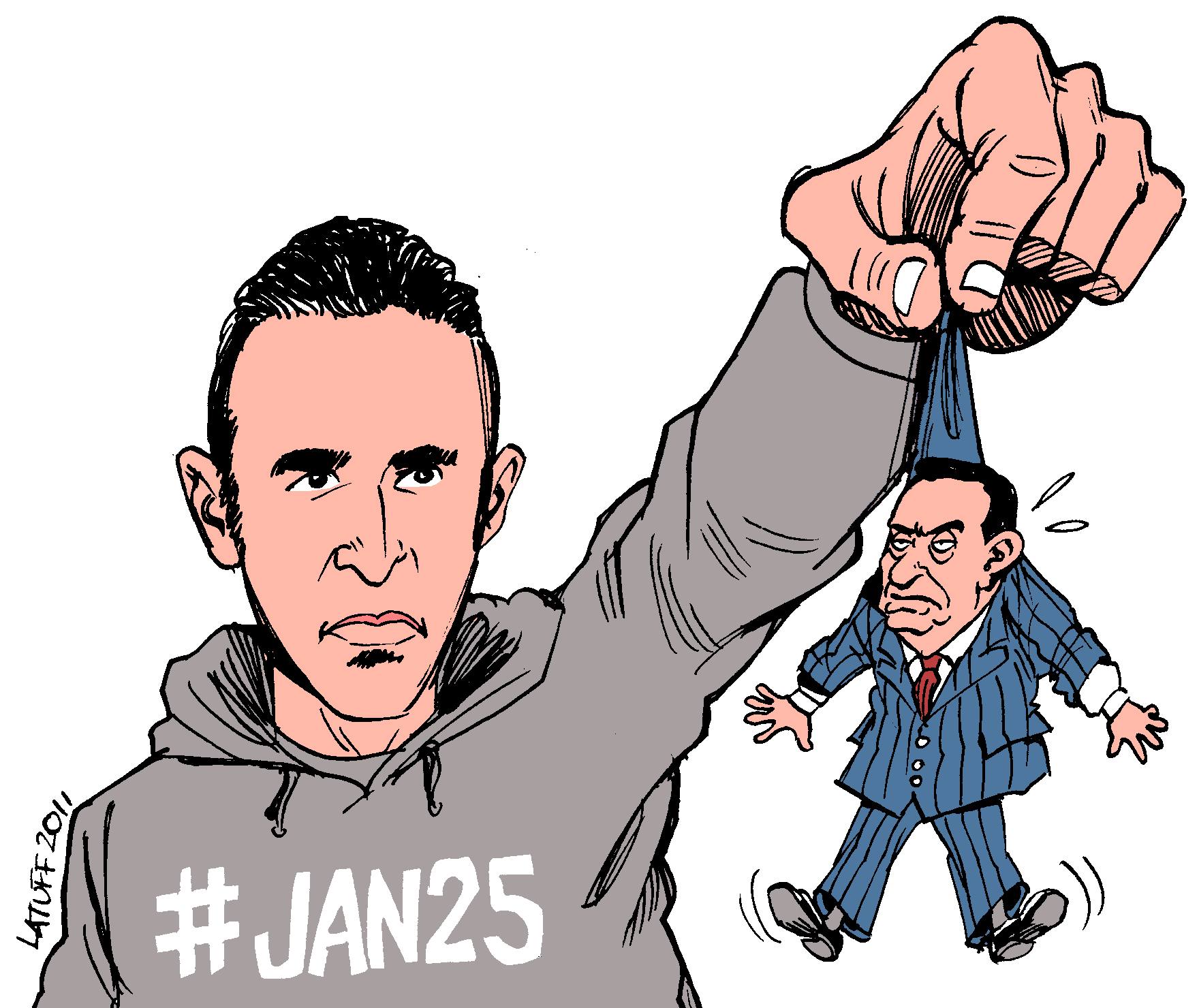
Carlos Latuff, the world-renowned cartoonist, has also drawn numerous illustrations to support the Egyptian revolution.
Spreading the fight
The revolution in Egypt has now triggered anti-government protests in other countries including Tunisia, Algeria, Iran and Libya.
China has blocked the word ‘Egypt’ from micro-blog searches – a sign of the Chinese government’s concerns that protests calling for political reform in Egypt could spill into China’s Internet space.
While China says the Internet is free and open to its 450 million users, the government blocks numerous social networking sites like Twitter, Flickr, Facebook and YouTube – all used to mobilize protests around the world.
Lessons learned from Egypt
The revolution showed us that people have become content producers instead of content consumers because of social media.
Social media tools in themselves are not useful unless people use them. All too often we prefer to talk of the tools. It is easier than trying to understand what was behind these tools. People need to understand that behind the social media are the Egyptian people themselves.
This reminds me of a quote by social media expert Mark Comerford in which he said, “As communication shift from personal conversations to digital transferring of messages, the interactions of groups and individuals change and help create a more efficient sociological community by connecting individuals who have common interests.”
Comerford pointed out that this shift in our approach will create conflicts and cause problems to people in power who are not comfortable with it. Online censorship, surveillance, repression are reactions to this shift.
With the Egyptian Revolution, we witnessed those in power trying to stop the revolt but they couldn’t because of the sheer will of the people. Networks were the most powerful weapons in this revolution.
- This article was published on Sipmly-Communicate
Twitter: @simplygroup


 Jasmine Elnadeem