There’s been a lot of debate on the value of social media. After all, it’s easy to argue about the potential of social media as a powerful marketing channel. The ability to communicate with so many people instantly is like catnip to marketers and business owners alike.
It seems we’ve witnessed the rarest of phenomena, a popular revolt toppling an Arab dictator and what’s clear is that the actions taken by Tunisians are reverberating around the region.
I’m aware of the fact that people make revolutions, but it looks like social media did have an important role to play here and we can’t deny that the online world is part of the world. It has a role.
Social media played a significant role in the events that have unfolded in the past month in Tunisia, and that the revolution appears far more likely to lead to lasting political change.
Online media did play a role in helping Tunisians learn about the actions their fellow citizens were taking and in making the decision to mobilize. How powerful and significant this influence was will be something that academics will study and argue over for years to come. Scholars aren’t the only ones who want to know whether social media played a role in the end of Ben Ali’s reign – it’s likely to be a hot topic of conversation in Amman, Algiers, and Cairo, as other autocratic leaders wonder whether the bubbling cauldron of unemployment, street protests, and digital media could burn them next.
They called it the #jasminrevolt, #sidibouzid revolt, #tunisia revolt, but there is only one name to what we are witnessing which is: Social media revolution.
Social media tools (Facebook, twitter, Youtube, blogs, etc.) are an information-distribution network, not that different from the telephone or email or text messaging, except that it is real-time and massively distributed – in the sense that a message posted by a blogger can be re-published thousands of times and transmitted halfway around the world in the blink of an eye. That is a very powerful thing, in part because the more rapidly the news is distributed, the more it can create a sense of momentum, helping a revolution to “Go Viral,” as marketing types like to say.
The reality of modern media is that social-media tools can be incredibly useful for spreading the news about revolutions because it gives everyone a voice.
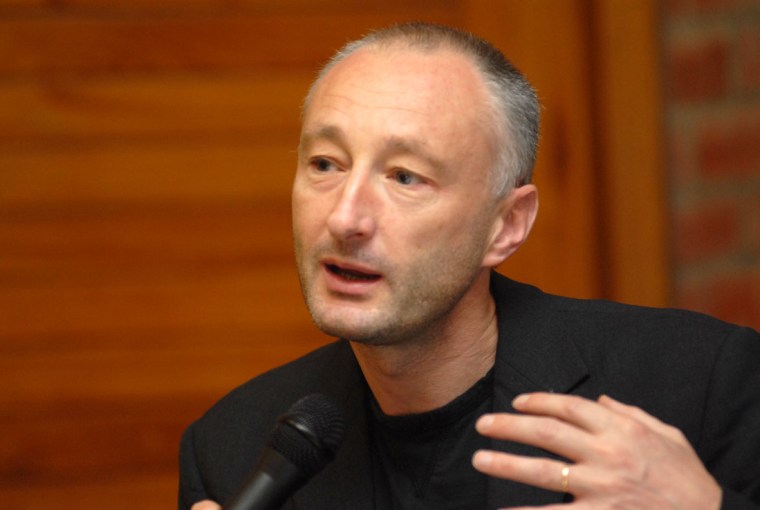
He initially moved to Sweden in the early eighties to work as a welder and a ship builder before moving to work in the digital world.
Since then he has spread his journalistic knowledge across the globe teaching people from Africa to Britain how to get the best out of the internet and digital technologies.
Mark Comerford established Europe’s first online newspaper in 1994 when he launched the website of Sweden’s biggest daily newspaper Aftonbladet.
He is a keen advocate that journalists should not be confined by what technology can currently offer, but rather make technology work for them.
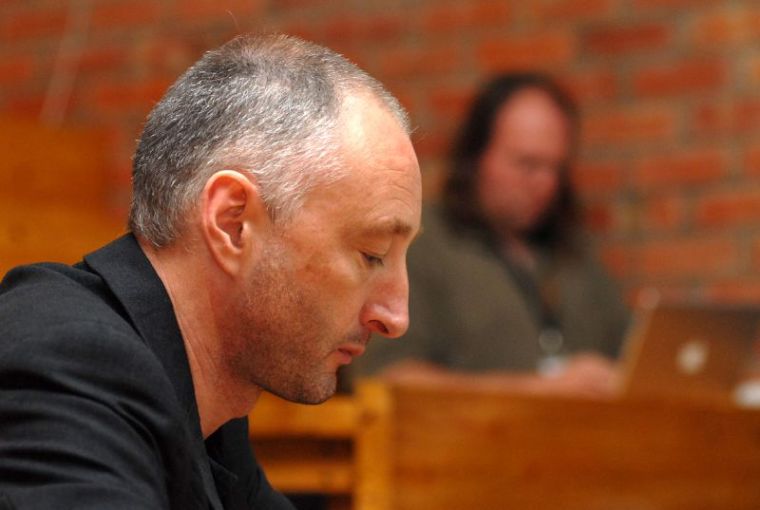
Mark Comerford
– You were a welder and a shipbuilder then you started working in the digital world, what made you take this path?
There was no plan, just a series of opportunities where I happened to be in the right place at the right time. Luck and serendipity.
– What is the purpose of social media?
There is no specific purpose. Different people, organizations, companies, all use social media in different ways. At its basic level I suppose it is to allow for more and better networked communication.
– People are turning to social media and networking more and more. What benefits do social networks have for newspapers looking to reach out to their audiences in new ways?
This will be different in different circumstances. To begin with any media organization has to (re)define who its target audienc(es) are. Then the organization has to redefine what communication means. For too long communication in media has meant “us” telling “them” what the story is. News organizations (and we also need to re-examine what we mean by news) need to understand that they do not have a monopoly on the story, just on reporters view. This can never be as rich a story as one built in cooperation with those who live it.
-Do you believe newspapers will become obsolete and be entirely replaced by news websites?
If by newspapers you mean the actual printed paper, then yes. This will occur at different speeds in different areas of the world of course, the digital infrastructure has to be there for this to occur. And there will still be paper based products, they will just be very different to what we generally see as newspapers today.
– How has the development of social media affected digital media strategies at newspaper companies?
Again, this differs a lot in different regions. In general it has yet to have a strategic impact on most newspapers. There is an increased usage of video and slide shows, some use of Twitter and other social media tools, but mainly this is the result of individual journalists using them rather than a strategic decision on the part of the management.
– Are their opportunities in social media that you think newspapers could take a better advantage of?
Yes. Lots. As a way of reconnecting to a rapidly dwindling public. As a way to reinvent story building, as a way to increase the breadth and depth of many investigative stories, as a way to once again become an integrated part of the communities they once say themselves serving. As a way to find new and more relevant sources. There are too many to mention all of them.
– In your experience, what digital media strategies have proved to work best? What practices should be avoided?
Listening works well. Thinking that only journalists can tell a story well, thinking the journalist has all the answers and believing that journalists and journalism are “objective” does not (in my opinion) work well.
– Do you use Twitter to interact with your readers? How? Do they offer story ideas, tips, and interview questions?
All of the above. I use my Twitter network as my filter (anything of interest will usually percolate up through my network), as my fact checker (no matter how much I know I can never know more than everyone), as a source, as co-creators and as sounding boards. I trust my network more than I trust myself.
– Is it acceptable to pay bloggers or social media types to post information?
That is an ethical policy question that each publication/blogger needs to ask themselves. Whatever the answer it should be communicated to the public clearly and unambiguously. If you have paid, then say so in the piece. And how much. If you lie, you will be found out. As trust is a cornerstone of communication, broken trust will be hugely damaging to your reputation.
– How do you see the bloggers in Arab countries?
As I see bloggers everywhere. Some are doing it for personal satisfaction, some for gain, some from passion, some from pain. A number of blogs from the MENA region fill a gaping and shameful hole in the dominant news industry, allowing for a freedom of speech and expression that is all too often censured either by repressive political regimes or by economic needs of the share holders of the major news organizations. There are a growing number of courageous voices that refuse to be silenced; voices that try to bring a side of the story that seldom get heard, to ears and eyes that want to see. Blogging and social media in general can be important tools to strengthen civil societies.
– What’s The Difference Between A Blogger and A Journalist?
I honestly can’t answer that question. Some journalists’ blog. Some bloggers do journalism. What is journalism? Who is a journalist? Who is a blogger? Who cares?
– What is the future of the journalist ten or twenty years from now?
Ahhh I wish I knew. That there is a great future for story builders, information facilitators, networkers, investigative “journalists” and others of that nature, I am sure. Exactly what form it will take I don’t know.
– You were monitoring the young leaders visitors programme for two years. What do you think about this programme and what change can it bring in the MENA region?
Hopeful it helped to create networks of trust that will play a role in strengthening both civil society, sustainability and human rights. But the program can only facilitated the initial contacts and give access to some informational tools and knowledge. Any change will be the result of passionate people prepared to organize and fight for what they believe to be right. People make change, not programs.




 Jasmine Elnadeem